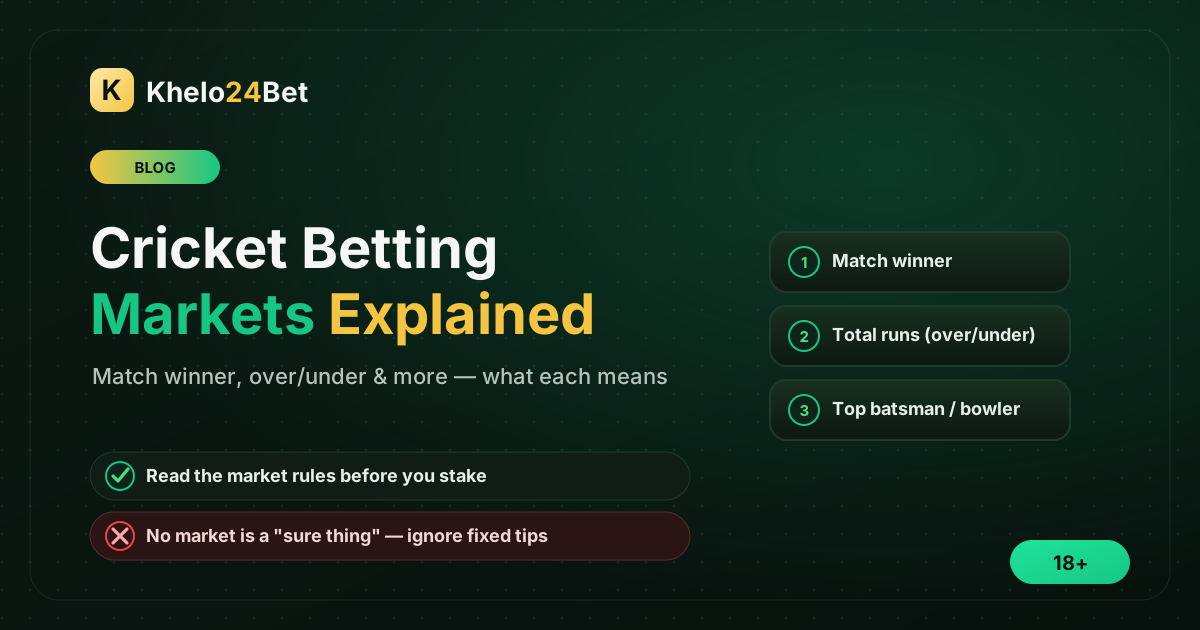
Open any cricket match on a gaming platform and you will not see one bet — you will see a long list of them. Each item on that list is a market: a specific question about the game that you can take a position on, from the obvious "who wins?" to narrower ones about runs, players and moments within a match. If yesterday's guide on how to read the odds taught you what the numbers mean, this guide teaches you what the numbers are attached to. It is written in plain English for adults aged 18 and above, and it deliberately avoids two things: invented figures, and any suggestion that a market can be a "sure thing".
One honest note up front. Understanding markets helps you make an informed choice; it does not make any outcome certain. Every market carries real risk, results are never guaranteed, and anyone offering a "fixed" or "locked" cricket market is running a scam, not a shortcut. This guide is about reading the game clearly, not beating it.
What a betting market actually is
A market is simply a defined question with a set of possible answers, each carrying its own odds. "Which team wins the match?" is one market; "will the total runs be over or under a set line?" is another. The important word is defined — every market comes with rules about exactly what counts, when it settles, and what happens if a match is shortened or abandoned. Two markets on the same match can settle in completely different ways, which is why reading the rule attached to a market matters as much as reading its odds.
The common cricket markets you will see
The exact list depends on the match and format, but most cricket markets fall into a handful of familiar categories. The table gives a plain description of each — not a recommendation to play any of them.
| Market | The question it asks | Worth knowing |
|---|---|---|
| Match winner | Which team wins the match? | The simplest market; in limited-overs cricket a tie or no-result has its own settlement rule |
| Total runs (over/under) | Will runs be above or below a set line? | Applies to a team, an innings or the match; the line is the whole point |
| Top batsman or bowler | Which named player tops a chart? | Usually needs the player to actually take part; check the "did not play" rule |
| Toss result | Which side wins the coin toss? | Pure chance, decided before a ball is bowled |
| Method or moment markets | How or when a specific event happens | Narrow and fast-settling; the rules are strict, so read them |
Notice how different the questions are. A match-winner market is about the whole game; a total-runs market ignores who wins and only cares about the count; a top-batsman market can hinge on whether one player even features in the eleven. The odds mean nothing until you know which question you are actually answering.
Pre-match markets versus in-play
Markets come in two broad timings, and the difference changes how they behave.
- Pre-match markets are set before the game starts, based on team news, conditions and form. They give you time to think, compare and decide calmly.
- In-play (live) markets open and change during the match. A wicket, a big over or a rain break can move them in seconds, and some live markets appear only briefly before the next ball.
In-play is where discipline matters most, because the speed that makes it feel exciting is the same speed that punishes a rushed decision. If you are new, pre-match markets are the calmer place to understand how a market settles before you ever watch one move live. Either way, the price you see is the current one, not the one from a moment ago — the same lesson the odds guide covers in detail.
How markets and odds fit together
Every answer inside a market has its own odds, and those odds express how likely that answer is judged to be. A short price on the favourite in a match-winner market signals a strongly favoured outcome with a small return; a longer price on the underdog signals a less likely outcome with a larger potential return for the same stake. The market defines the question; the odds price each answer to it. Reading the two together — the exact question, and the chance the number implies — is the whole skill. Neither half tells you what will happen.
Why the market rules matter more than they look
This is the part beginners skip and later regret. Because two markets can settle differently, the rule attached to each is not fine print — it is the deal itself. A few honest examples of why:
- Shortened matches. Rain and reduced overs can change how a total-runs or match-winner market settles, or void it entirely. The rule tells you which.
- Players who do not feature. A top-batsman market usually depends on the player being part of the game. If they are left out, the settlement rule decides what happens to the position.
- When a market settles. Some markets close and settle mid-match rather than at the end, which is not always obvious from the name.
The habit is simple: before you commit to any market, read exactly what counts and when it settles. If a rule is unclear, ask on the official support channel before you stake, not after.
Choosing a market sensibly
More markets is not the same as more opportunity. A calm approach treats the list as information, not pressure.
- Understand the question first. If you cannot explain in one sentence what would make a market win, you are not ready to stake on it.
- Start with the simpler markets. Match winner and total runs are easier to reason about than narrow moment markets.
- Set your budget before you look at the list. Decide what you can comfortably lose, then choose a market — never the other way round.
- Ignore the "special" market being pushed at you. No market is a guaranteed win, and anyone framing one that way is misleading you.
If you are still setting up, the cricket access guide explains how the cricket side works once your Khelo24Bet ID is ready.
The honest limits — and the scam signs
No amount of market knowledge removes uncertainty; sport is unpredictable by nature, which is the entire reason these markets exist. A favourite in a match-winner market loses often enough that "favoured" and "safe" are not the same word. So treat any of these as a stop sign, never a shortcut: a "fixed" or "locked" market, a "guaranteed" result, a tip that promises a certain outcome, or pressure to stake on a market right now before it "closes". Our guide on whether Khelo24Bet is safe explains how these tricks are dressed up, and keeping your account itself secure is covered in the guide to keeping your gaming ID safe.
Common spelling note
Some users search for "khelo24ber markets" or "khelobet24 cricket markets", where letters are transposed or the "t" is mistyped as "r". The correct brand spelling is Khelo24Bet. If a typo brought you here you are in the right place — but always double-check any site that shows you markets and asks for your details, because typo domains are a favourite way to run fake markets and phishing pages.
Play safely and responsibly
Knowing your markets makes you a more informed player, but it never makes an outcome certain, and it never turns entertainment into income. Khelo24Bet is strictly for adults aged 18 and over, in regions where such play is permitted. Set a budget before you open a single market, treat any money staked as the cost of entertainment, and never chase losses or borrow to play. If it ever stops feeling fun, step away and reach out to a professional support organisation. Read each market honestly, keep your stakes within your limits, and let understanding inform your choices rather than tempt you past them.